Physical Aches and Pains During the Fourth Trimester
- redmondkaela
- Feb 3
- 5 min read
Physical Therapist. Leslie McGehee, PT, DPT, weighs in on how to create a gameplan suitable for your family.
Becoming a new parent comes with many expected changes, new cribs and car seats, an evolving routine, and quality time caring for your newborn. What’s less expected is how physically demanding the fourth trimester can be on both parents. Between feeding, rocking, diaper changes, contact naps, car seat transfers, and sleepless nights, your body is suddenly working overtime in ways it may not be used to. While caring for a newborn may not feel like traditional exercise, it can place significant strain on the body over time. The good news? Many of these aches and pains are preventable, if you stay ahead of them. By using better body mechanics, setting up your environment intentionally, and incorporating small amounts of movement into your day, you can protect your body and feel more comfortable while caring for your baby.
Key Points:
Establish good mechanics with bending and lifting.
Change positions and incorporate movement as often as you can.
Adapt your environment for success.
1. Use Optimal Body Mechanics to Avoid Aches and Pains:
Both parents spend countless reps each day lifting, carrying, rocking, and transferring their baby from the crib, car seat, floor, and couch. These repetitive movements can quickly add up and lead to lower back pain, shoulder and neck tension, and wrist or thumb irritation if your body mechanics aren’t working in your favor. The number one tip to remember is keep your baby close to your body, especially as they get heavier. This reduces overall energy expenditure and fatigue.
When bending down to lift your baby, focus on hinging at your hips instead of rounding through your lower back. Keep your knees unlocked and think of sending your hips backward while keeping your spine straight. This allows your powerful glute muscles to share the workload instead of relying on your spine alone, and you’re incorporating deadlifts into your routine without even going to the gym!

When you’re getting down to the floor for tummy time, reaching into the crib, or standing up while holding your baby, lunges can be a game changer. Instead of dropping straight down into your front knee, think about pushing your hips back and keeping your spine straight. Your front knee should stay stacked over your ankle, and you should feel the work in your hips and thighs, not pressure in your knees. This strategy helps protect your knees, supports core stability, and makes getting up and down with your baby feel more like muscle work compared to joint pain.

Newborns are often scooped up dozens of times a day from the bassinet, car seat, or the diaper changing table and those repeated wrist positions can lead to common pain known as “parent thumb” or wrist tendinitis highlighted below. Often mistaken for carpal tunnel syndrome, the tendinitis is a result of excessive wrist motion with picking up weighted objects, such as your new baby.

Instead of letting your wrist and thumb bend forward and backward as you lift, try to keep it in a straight, neutral position, as if you were shaking someone’s hand. Bend at the elbow, and use your whole arm to support your baby rather than relying on your hand and thumb alone. This small adjustment can go a long way in preventing nagging wrist and thumb pain for both parents.

2. Change Positions and Move Throughout the Day to Avoid Aches and Pains
Whether you’re the parent who recently gave birth or the parent who is supporting and caregiving, your body thrives on movement. While exercise can be limited in the first 4-6 weeks for mom, gentle movement can combat long stretches of feeding, holding, rocking, or contact napping that can leave anyone feeling stiff and sore. Aim to change positions every 30–60 minutes when possible, even if it’s small adjustments. Stand up, stretch gently, roll your shoulders, take a short walk across the room, or reset your posture. These short movement breaks don’t need to look like formal exercise to be effective. Over time, consistent movement helps reduce tension, improve circulation, and support recovery for both parents during the physically demanding fourth trimester.

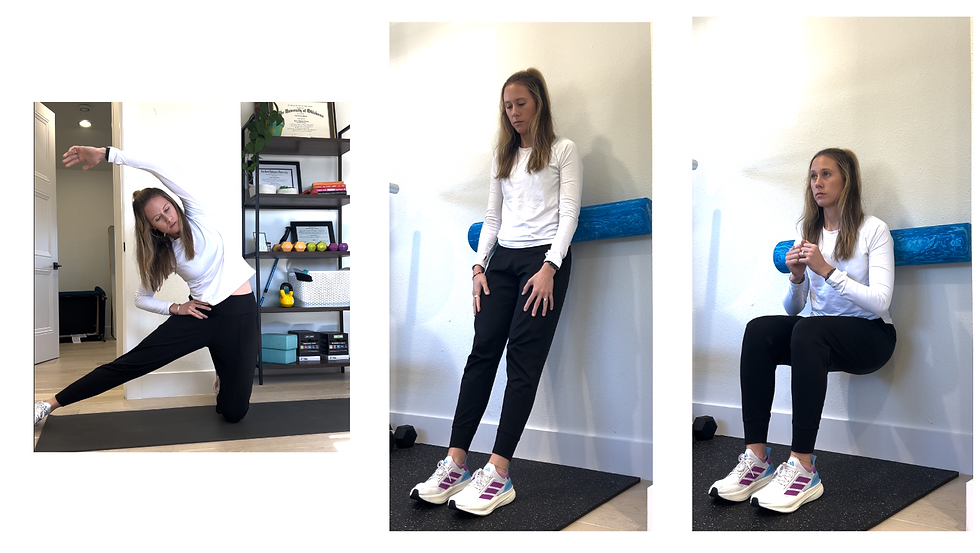
Hours of feeding, holding, rocking, and looking down at your baby can gradually pull the shoulders forward and round the upper back, leaving many parents feeling stiff through the chest and tight between the shoulder blades. This posture can contribute to neck tension, upper back discomfort, and even shallow breathing over time. Improving thoracic (mid-back) mobility and gently opening the chest helps restore better posture, allows the ribs to move more freely, and reduces daily strain. The foam roller stretch shown here is a simple way to counteract those positions by encouraging chest opening and upper back extension. Set a timer for 2-3 minutes and hold each position for 5-10 seconds. You can do this exercise with or without a foam roller - but most parents agree it feels amazing, so it’s absolutely worth trying.
Incorporating a well-rounded movement routine can make a meaningful difference in how you feel day to day. A balanced approach includes gentle mobility to keep joints lubricated and moving well, stretching to reduce tension, and bodyweight resistance training to build the strength needed for lifting, carrying, and supporting your baby. The best part is that this doesn’t require a full gym or fancy equipment, but simple tools you likely already have at home, like a foam roller, yoga blocks, a birth ball, or a sturdy chair, can be incredibly effective. The adductor and oblique stretch shown helps maintain flexibility in the hips and trunk, while the foam roller squat against the wall builds lower body and core strength in a supportive, accessible way. Small, consistent movement practices like these help your body feel more resilient and better prepared for the physical demands of parenthood.
3. Adapt Your Environment for Success
The structure of your home setup may seem like a small detail, but ergonomically it’s a powerful component to consider. Small changes to your environment can make daily caregiving tasks feel easier and less physically taxing, and will pay off over the course of months and years. Thoughtful setup helps protect both parents’ bodies while making caregiving more sustainable.
Raising the crib and diaper-changing table height between your chest and belly button when possible so you’re not repeatedly overreaching.
Use supportive pillows or feeding cushions under the arms so whoever is feeding isn’t hunching forward or shrugging their shoulders for long periods of time.
If one or both of you are spending lots of time in a favorite chair or on the couch, add lumbar support or choose seating that allows feet to rest flat on the floor.
Place workout equipment in frequently used spaces, so you can incorporate movement while the baby is doing tummy time.
Sit on a yoga or birth ball when gently rocking or soothing your baby.
Caring for your body is just as important as caring for your baby, especially during the physically demanding fourth trimester. By using better body mechanics, setting up your environment intentionally, and changing positions often, you can reduce many common aches and pains before they start. If you’re struggling with discomfort or simply want to be proactive, a physical therapist can provide individualized guidance tailored to your body, your lifestyle, and your daily routines. Physical therapy can help you improve strength, mobility, posture, and movement patterns so everyday tasks like feeding, lifting, and carrying feel easier. With the right support, you can protect your body now and build a strong foundation for long-term movement and health.

Dr. Leslie McGehee, PT, DPT
Physical Therapist and Pelvic Health Specialist
The Fit Pelvis Physical Therapy and Wellness
Explore More from Fourth Trimester Training
Related Fourth Trimester Training Blog Posts


Comments